marina tabassum brings flood-resilient housing and civic architecture to TOTO GALLERY·MA

TOTO Gallery·MA Traces Marina Tabassum Architects’ innovations


TOTO Gallery·MA hosts People Place Poiesis, an exhibition that traces how Marina Tabassum Architects (MTA) reshapes architecture in Bangladesh through climate-attuned design, community agency, and lightweight systems built for a rapidly changing world. On view until February 15th, 2026, the show spans two floors and extends into the courtyard with a full-scale Khudi Bari, MTA’s now-seminal flood-resilient housing prototype, installed alongside a newly developed Japan-specific version built with architect Kazuya Morita and students from Kyoto Prefectural University. Previously presented in Munich and Lisbon, this Tokyo edition sharpens the spatial contrasts of the exhibition, placing rural, urban, and transnational responses in close conversation.


images courtesy of TOTO GALLERY·MA, unless stated otherwise


A Journey Through Climate-Responsive Architecture


Visitors enter through a landscape of Marina Tabassum Architects’s work rooted in the riverine and agricultural regions of Bangladesh, a context where roughly one-third of the land can be submerged by seasonal flooding. Photographs, videos, and models, some originally shown at the 2018 Venice Architecture Biennale, outline the spatial, environmental, and social challenges shaping everyday life outside Dhaka.


The upper floor shifts toward Dhaka’s dense neighborhoods, spotlighting MTA’s civic and community-oriented buildings. Community centers, mosques, and public spaces illustrate how the practice uses geometry, brick, and ventilation strategies to create openness without mechanical cooling. The acclaimed Bait Ur Rouf Mosque, built from locally fired bricks and conceived as a serene, breezy sanctuary, becomes a key reference point. A model of the 2025 Serpentine Pavilion adds another layer, showing how MTA translates its climate-responsive principles into a global context.


TOTO Gallery·MA hosts People Place Poiesis | image © designboom


khudi bari: mobility, empowerment, and translocal adaptation


Anchoring the exhibition is Khudi Bari, the compact, easily assembled shelter designed for people displaced by flooding or forced migration. Built from lightweight components that local communities can erect and dismantle themselves, the structure doubles as emergency relief and everyday dwelling. Through F.A.C.E. (Foundation for Architecture and Community Equity), Tabassum’s team deploys these units across Bangladesh and adapts them into larger configurations, including a community center within the Rohingya refugee camps.


At Gallery·MA, the original Bangladeshi Khudi Bari stands in dialogue with a ‘Japanese version,’ constructed with local materials and techniques in collaboration with Morita’s laboratory. The pairing highlights how a design born from Bangladesh’s deltaic conditions can be reinterpreted within Japan’s satoyama landscapes.


tracing how Marina Tabassum Architects reshapes architecture in Bangladesh


the show spans two floors and extends into the courtyard | image © designboom


this Tokyo edition sharpens the spatial contrasts of the exhibition


Aggregation Center model | image © designboom
marina-tabassum-flood-resilient-housing-civic-architectures-toto-gallery-ma-designboom-large02

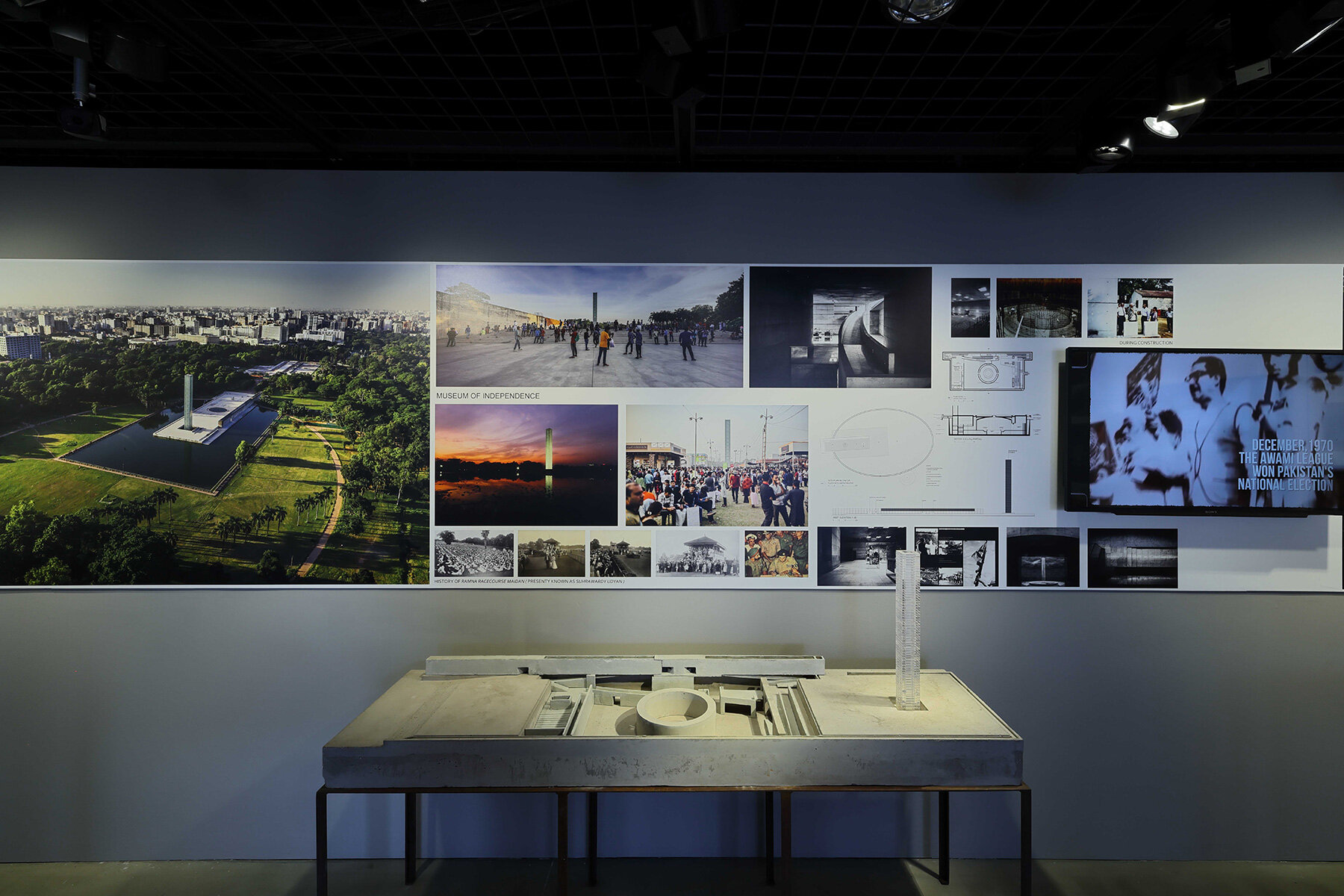
Museum of Independence model


placing rural, urban, and transnational responses in close conversation


outlining the spatial, environmental, and social challenges shaping everyday life outside Dhaka | image © designboom


the upper floor shifts toward Dhaka’s dense neighborhoods | image © designboom


spotlighting MTA’s civic and community-oriented buildings


Alfadanga Mosque model | image © designboom


showing how MTA translates its climate-responsive principles into a global context


A Capsule in Time, Serpentine Pavilion 2025 model | image © designboom


Marina Tabassum at the exhibition opening | image © designboom


project info:


name: Marina Tabassum Architects: People Place Poiesis

architect: Marina Tabassum Architects (MTA) | @marinatabassum

dates: November 21, 2025 – February 15, 2026

location: TOTO GALLERY·MA, Tokyo, Japan

special advisor: Tadao Ando

support: Tokyo Society of Architects & Building Engineers, Japan Institute of Architects Kanto-Koshinetsu Chapter, Architectural Institute of Japan Kanto Chapter, and others

cooperation: Kazuya Morita Laboratory, Kyoto Prefectural University

The post marina tabassum brings flood-resilient housing and civic architecture to TOTO GALLERY·MA appeared first on designboom | architecture & design magazine.

hexagonal wooden forms shape totemic red oak house tower by ulf mejergren in sweden

Oak House rises as a hexagonal wooden tower in Kalmar


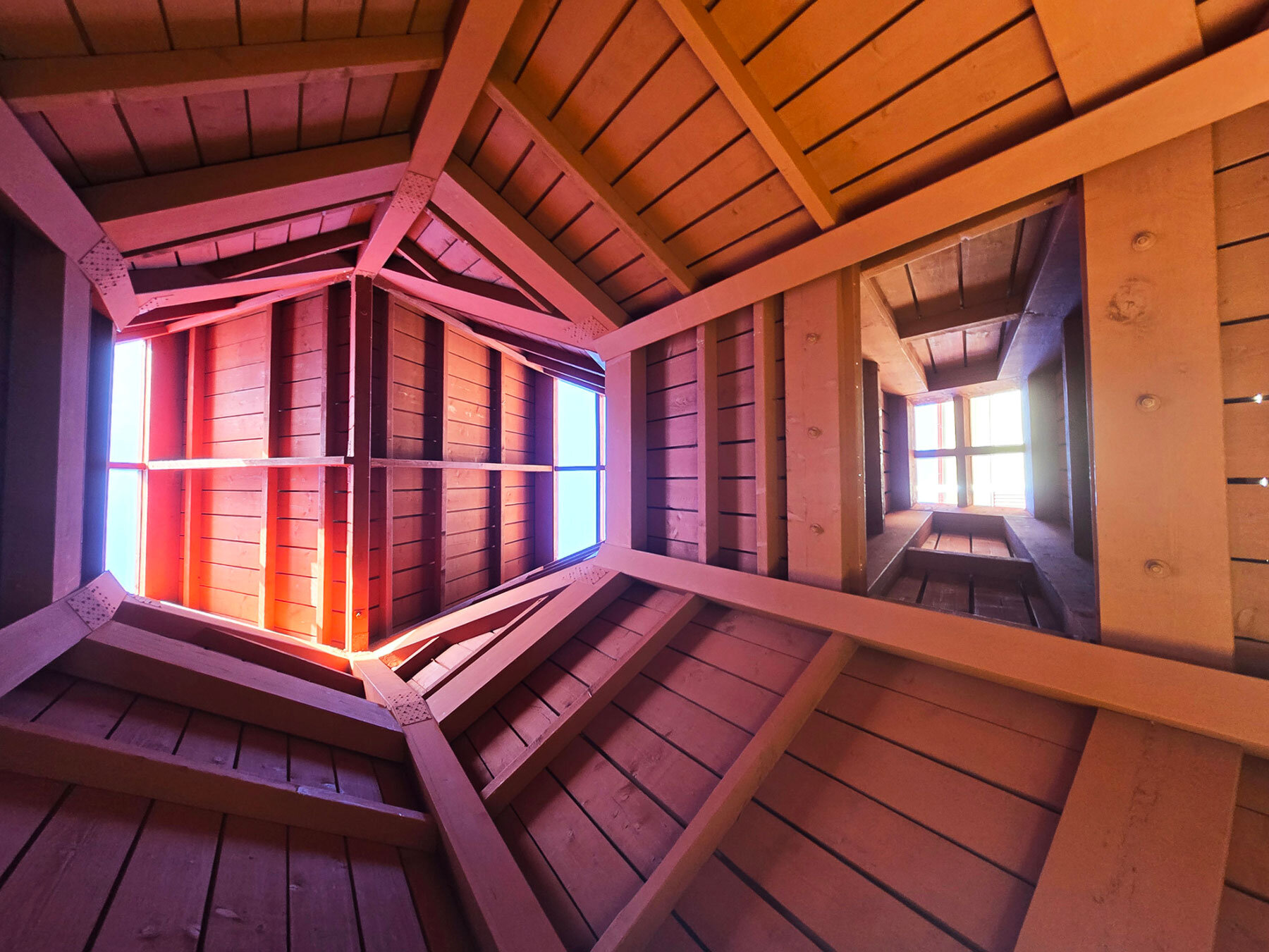
Ulf Mejergren Architects (UMA) builds Oak House, a hexagonal wooden structure that merges a hollow ancient oak with a small red house. About 6.5 meters tall, it rises like an oversized woodland character, familiar yet slightly surreal. Children enter through an opening low in the ‘trunk,’ where light filters down from above through thick, branch-like volumes. Inside, it holds equipment for excursions, natural finds to explore, and framed illustrations revealing the oak’s hidden world of insects, birds, and fungi.


The installation stands along Värsnäs Preschool, at the edge of the new Snurrom district in Kalmar, Sweden, where the new neighborhood meets the protected oak forests of the Värsnäs nature reserve. Around fifty ancient oaks tower here, sculptural giants shaped by time, weather, and long life. Their almost fairytale presence forms the starting point for a two-part sculptural artwork: the outdoor Oak House (Ekstugan) and the indoor Oak Place (Ekplatsen). Together, they anchor the preschool in the landscape and let the oak tree become both guide and companion.


all images courtesy of Ulf Mejergren Architects (UMA)


Ulf Mejergren extends the concept indoors, with Oak Place


Studio Ulf Mejergren Architects (UMA) continues the story indoors with the Oak Place. Shaped like a generous stump, it is both furniture and a space of its own. Its form echoes the Oak House but suits indoor use. End-grain oak floors and wide oak boards on the walls create a warm, tactile atmosphere. The Oak Place can shift roles easily: reading corner, workspace, exhibition surface, or tiny stage. From here, children can also look out toward the Oak House, linking the two works into one living gesture. Together, the Oak House and the Oak Place create a continuous experience that blends play, nature, and architecture. They encourage children to explore both outdoors and indoors, letting the oak tree shape discovery, learning, and the preschool’s identity.


Oak House rises as a hexagonal wooden structure shaped around an ancient oak


the installation stands beside Värsnäs Preschool in Kalmar, Sweden


children enter through a low opening at the base of the ‘trunk’


the structure merges a hollow oak form with the silhouette of a small red house

oak-house-ulf-mejergren-architects-uma-kalmar-sweden-designboom-1800-2

light filters down from above through thick, branch-like wooden volumes


Oak House embed nature into daily preschool life and learning


Oak Place continues the narrative indoors as a stump-shaped room


project info:


name: Oak House

architects: Ulf Mejergren Architects (UMA) | @ulfmejergrenarchitects

location: Kalmar, Sweden


designboom has received this project from our DIY submissions feature, where we welcome our readers to submit their own work for publication. see more project submissions from our readers here.


edited by: christina vergopoulou | designboom

The post hexagonal wooden forms shape totemic red oak house tower by ulf mejergren in sweden appeared first on designboom | architecture & design magazine.

diagonally cut A-frame roof revives dutch holiday home by kumiki

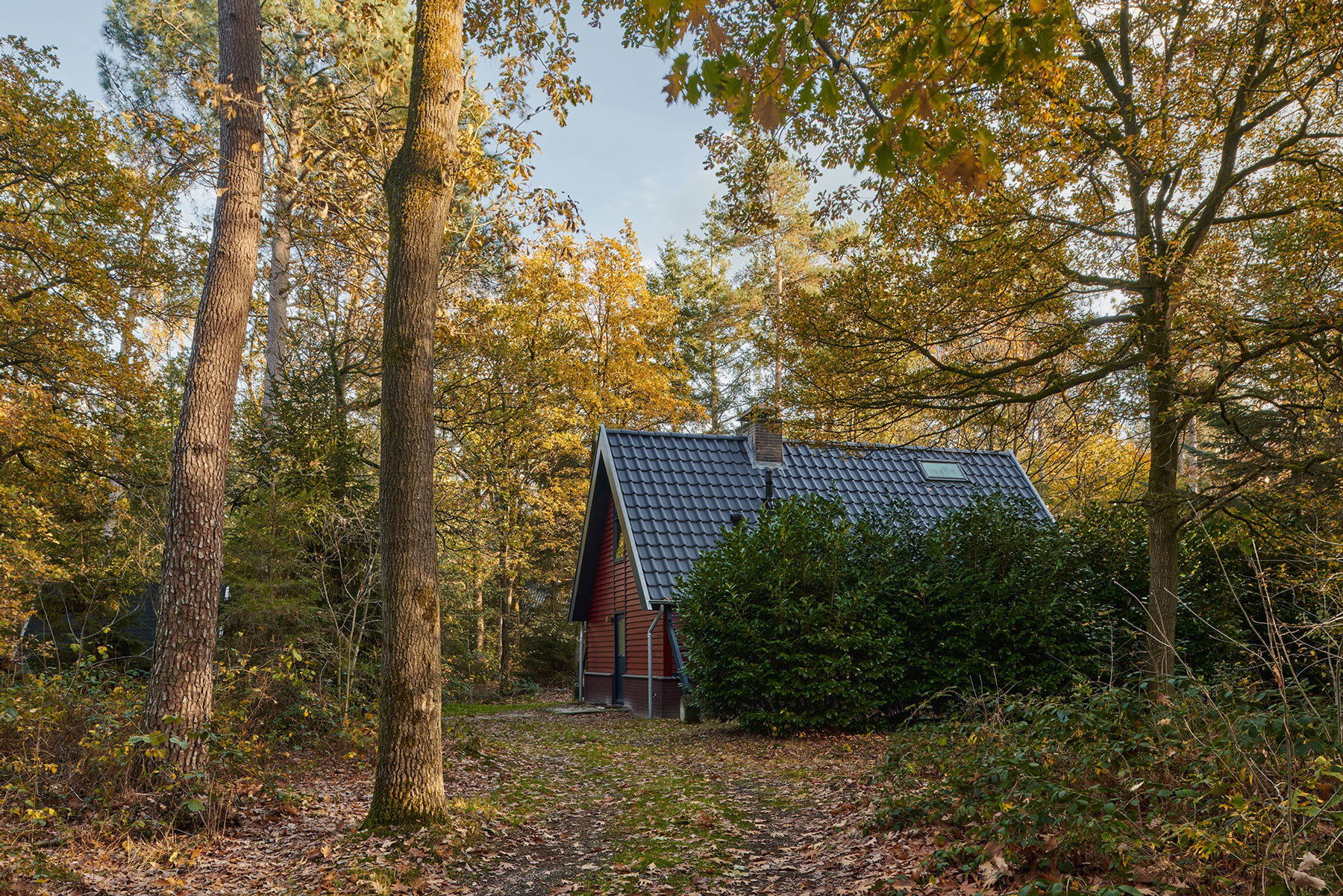
Kumiki Architects renovates 1984 holiday home in Herperduin


Kumiki Architecture takes over the extension and renovation of a characteristic A-frame holiday home from 1984 in the Netherlands. The structure stands amidst the forest park near the Herperduin nature reserve, surrounded by heathlands, ponds, and sand drifts. The residence has been transformed into a retreat for a young family, a place to escape the bustle of the city and reconnect with nature. In collaboration with the client and an ecologist, a design was developed in which architecture and ecology intertwine. The guiding principle: sharing the house with nature. When the family is away, birds, bats, and other animals take over. Nesting boxes are integrated into the eaves, and a ‘bat hotel’ is built into the facade. This integrated ecological plan strengthens biodiversity and allows the kids to learn about the life in and around the forest.


all images by MWA Hart Nibbrig


renovation restores original A-frame with new angled roof


The extension, conceived by Kumiki Architecture’s design team, follows the logic of the original A-frame, extending its rhythm across two stories. Only at the terrace does a new architectural element deliberately break from the existing form. Here, the roof is cut at an angle to allow sunlight to reach deep into the interior, while the large overhang provides shade and protection from rain and summer heat. The terrace cut-out is deliberately differentiated in material, marking the moment the house opens itself toward the forest. The new exterior colors are inspired by the earthy tones of the surroundings, allowing the house to blend naturally into the landscape. The renewed roof is insulated with wood fiber and finished with new roof tiles, a contemporary update that builds upon the original character of the holiday home.


a renovated A-frame retreat set within the Herperduin forest park


Natural and rugged materials adorn the house’s interior


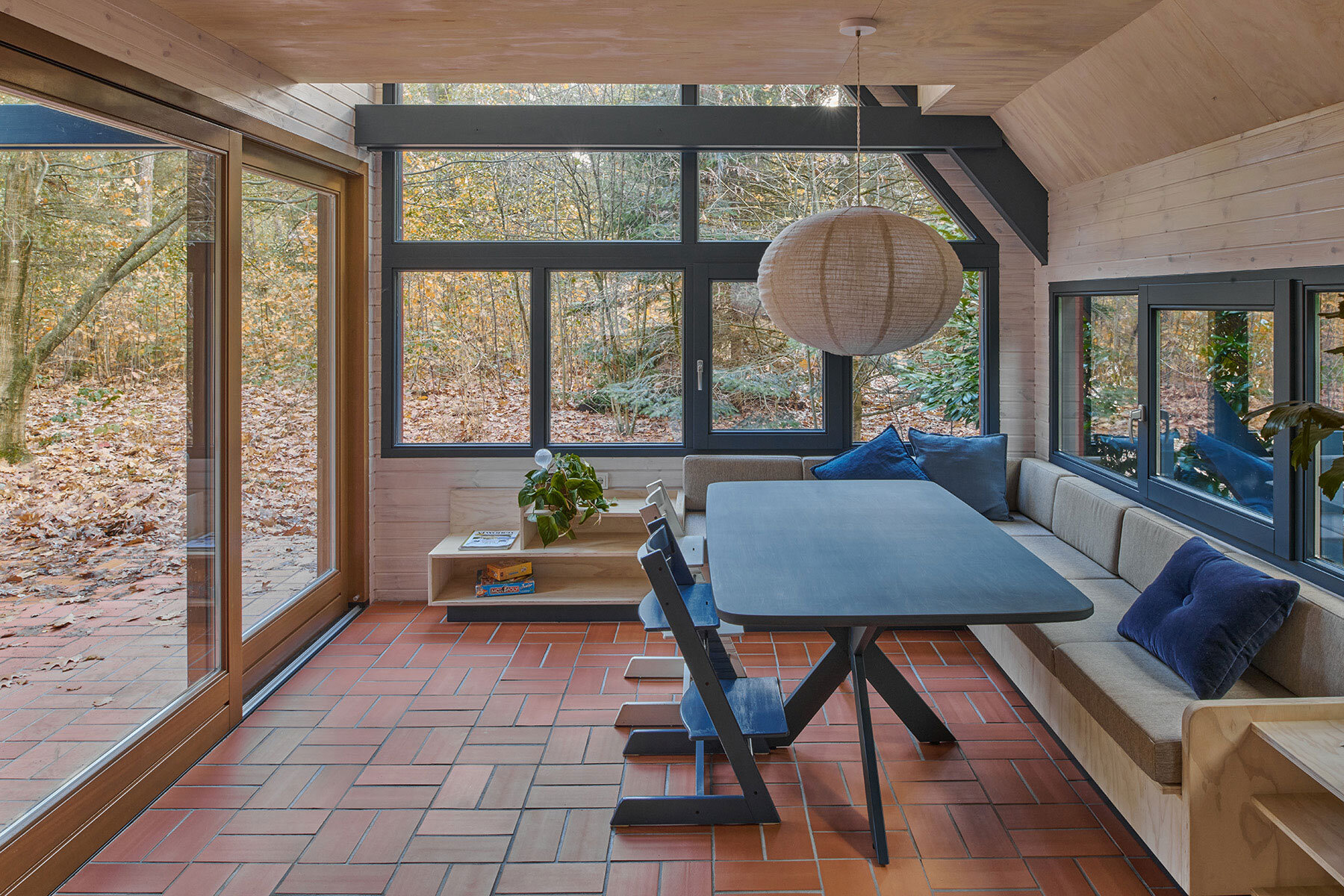
Inside, the sloped ceiling and large south-facing window create a bright and spacious atmosphere. Natural and rugged materials contribute to a relaxed rhythm of living. Terracotta floor tiles extend onto the terrace, blurring the boundary between inside and out. Upstairs, a cozy alcove bed for adults and a children’s bedroom with a double bunk bed, supported by tree branches, offer playful references to the forest outside. With a multi-year planting plan, rainwater collection, and habitats for wildlife, the holiday home by Kumiki Architecture plays an active role in the broader ecosystem of Herperduin. The ecological concept now serves as a blueprint for future renovations across the holiday park, allowing the entire area to grow as part of this green network. In this way, the house becomes not only a place for rest and retreat, but also a living example of regenerative living, where every intervention gives something back to nature.


the 1984 holiday home sits among heathlands, ponds, and sand drifts


the extension’s roof is angled to draw sunlight deep into the interior

kumiki-architecture-renovation-a-frame-holiday-home-netherlands-designboom-1800-2

Kumiki Architecture extends the original A-frame using its existing rhythm


exterior colors echo the earthy tones of the surrounding landscape


nesting boxes integrated into the eaves support local species

kumiki-architecture-renovation-a-frame-holiday-home-netherlands-designboom-1800-3

natural materials create a relaxed atmosphere inside the home


terracotta tiles flow from the interior onto the terrace


the sloped ceiling and south-facing window brighten the main living space


a children’s bunk bed supported by tree branches references the forest outside


the renovated home serves as a model for regenerative living in the holiday park


project info:


name: Holiday House Herperduin

architect: Kumiki Architecture | @kumiki.architecture

area: 85 sqm

location: Herpen, Netherlands


lead architects: Kevin Veenhuizen, Tuana Bukken Yildiz

landscape design: Faunest
contractor: Olympa Houtbouw
carpentrer: Bijsther Meubelmakerij
structural engineer: Harder Construction

photographer: MWA Hart Nibbrig | @mwahartnibbrig


designboom has received this project from our DIY submissions feature, where we welcome our readers to submit their own work for publication. see more project submissions from our readers here.


edited by: christina vergopoulou | designboom

The post diagonally cut A-frame roof revives dutch holiday home by kumiki appeared first on designboom | architecture & design magazine.

interlocking stone volumes sculpt layered school complex by brenac & gonzalez & associés

Brenac & Gonzalez & Associes builds Les Fabriques School complex


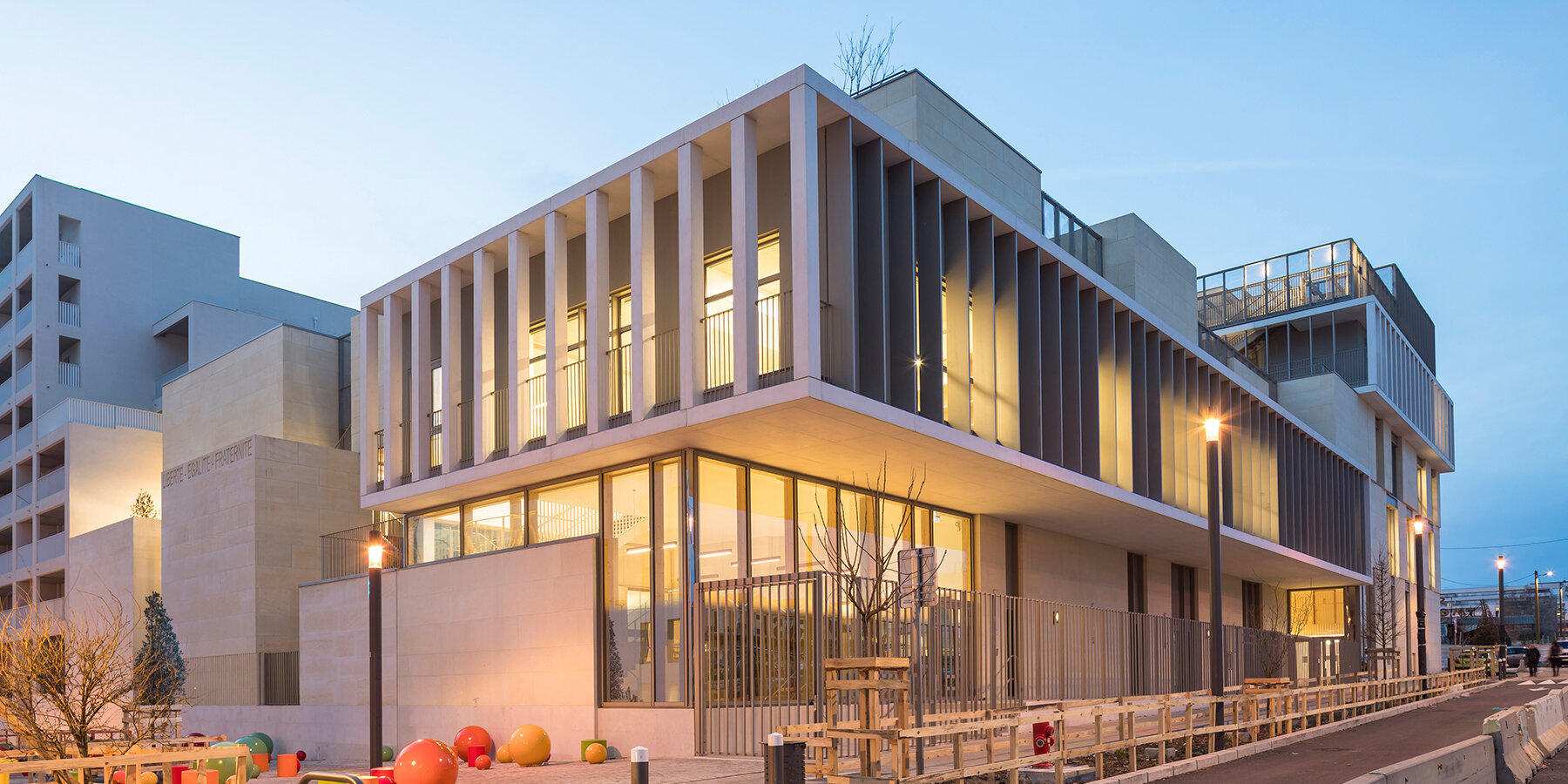
Located in the northern districts of Marseille, France, Les Fabriques is a school complex by Brenac & Gonzalez & Associés designed as a compact, climate-responsive structure built from solid stone. Positioned on a constrained plot within the Littorale urban development zone, the project integrates a nursery school and an elementary school, each with dedicated reception areas, circulation routes, and naturally lit and ventilated classrooms.


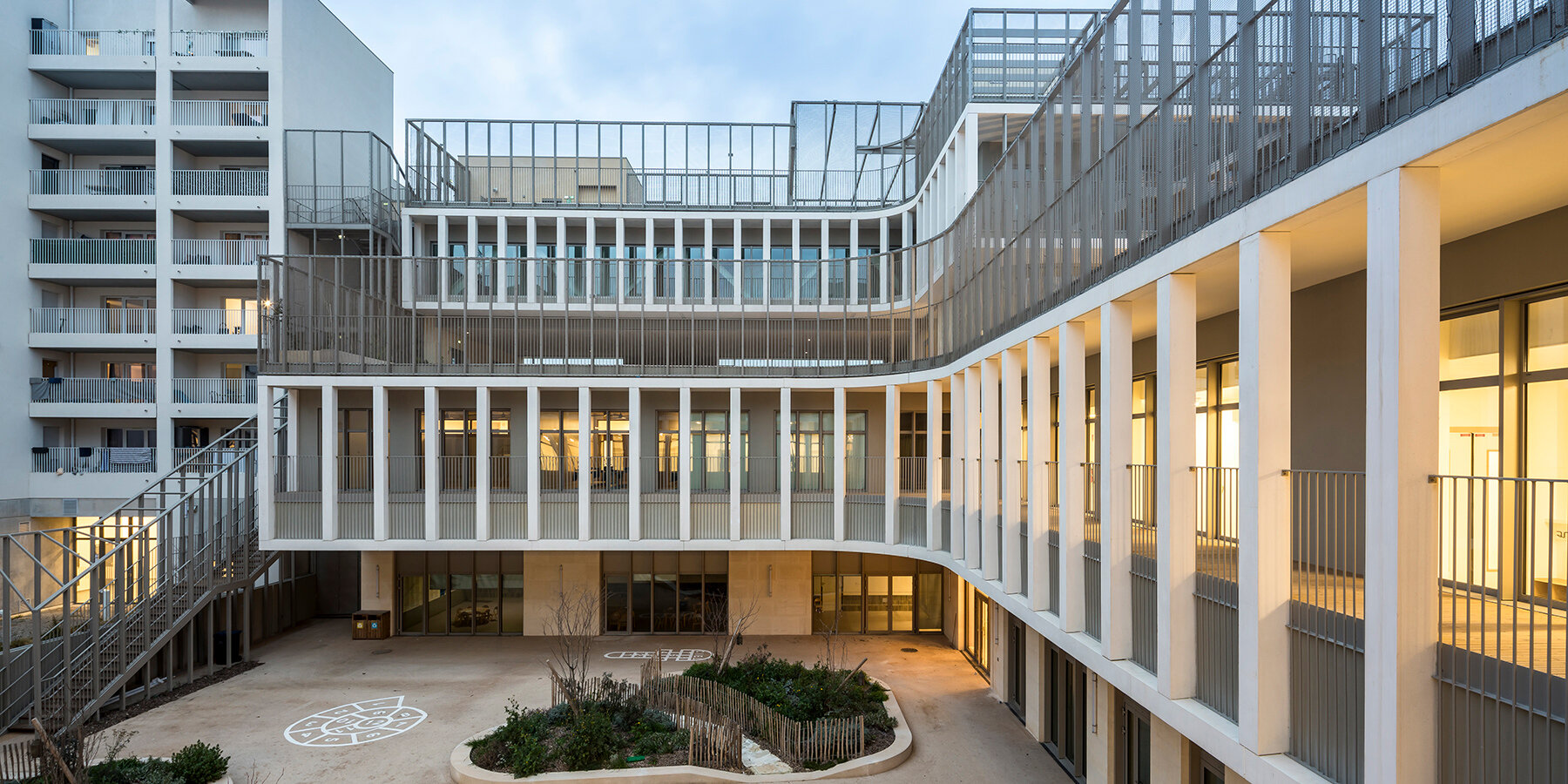
The design adopts a vertical strategy that consolidates program elements in order to free ground space for the preschool playground. Additional outdoor areas for the elementary school, like playgrounds, gardens, and educational terraces, are arranged in a stepped configuration rising to the roof. At the request of the City of Marseille, the rooftop accommodates a sports facility that includes half a basketball court, an athletics track, and a tensile mesh structure reminiscent of a catamaran sail. This upper-level program extends the building’s public role by serving as a neighborhood gathering space outside school hours.


stone volumes form the school’s compact urban massing | all images by Sergio Grazia unless stated otherwise


Thick Stone facade and Terraced Volumes Form School Landscape


BGA’s design team defines the complex as a ‘landscape building,’ composed of interlocking mineral volumes that follow the site’s topography. The massing generates sheltered interstitial spaces used as open-air classrooms, performance areas, and gardens. These spaces contribute to climatic comfort while supporting biodiversity, including bird habitats. The overall morphology responds to local environmental conditions, like strong mistral winds, high solar exposure, and recurrent heatwaves, by creating a sequence of protected, navigable zones throughout the school.


The building envelope is constructed from solid stone sourced from the Beaulieu quarry. Blocks measuring 20 to 45 cm thick provide thermal inertia and long-term durability. Deep overhangs and the stone’s material density moderate heat gain, stabilizing interior temperatures across classrooms and corridors. Stone and concrete are used together as a hybrid structural system, balancing mass with structural efficiency.


tiered outdoor terraces connect learning spaces across levels


Daily Function and Public Access organize School’s Spatial layout


Attention to daily use is reflected in design details such as a continuous line of coat hooks inspired by Osvaldo Cavandoli, which introduces a clear and legible orientation device for children. Circulation is organized to support calm movement and supervision within the school, addressing both functional and safety requirements in this part of the city. Brenac & Gonzalez & Associes’ project was carried out in close coordination with Euroméditerranée and the City of Marseille, who supported program adjustments, including the integration of the rooftop sports facility, and facilitated experimentation with construction methods. The building also participates in the city’s ‘À nous les toits’ initiative, allowing use by local associations and residents outside school hours.


Les Fabriques demonstrates how solid stone construction, compact massing, and tiered outdoor spaces can be combined to achieve climatic resilience within dense urban conditions. The project establishes a protective and adaptable environment for education while contributing a durable architectural presence to Marseille’s northern districts.


deep overhangs in solid stone provide passive solar protection


the preschool playground occupies the site’s open central area


interlocking-stone-volumes-layered-les-fabriques-school-complex-brenac-gonzalez-associes-marseille-france-designboom-1800-2

interlocking blocks create sheltered courtyards and passageways


stone facades emphasize durability and thermal inertia


the stone cores were reused in the construction of the wall

interlocking-stone-volumes-layered-les-fabriques-school-complex-brenac-gonzalez-associes-marseille-france-designboom-1800-3

Les Fabriques’ solid stone construction and tiered outdoor spaces achieve climatic resilience


project info:


name: Les Fabriques

architect: Brenac & Gonzalez & Associés | @brenacgonzalezassocies

area: 3575 sqm

location: Marseille, France


project architect: Jean-Pierre Lévêque

project managers: Julien Gonin and Arnaud Ladauge

landscape design: MOZ Landscape

client: Euroméditerranée – Établissement Public d’Aménagement – Marseille

engineering: ACV/AGS (VRD) / ALTO (Electrical Engineering, Fluids & Climate Engineering, Environmental Engineering) / Bollingher&Grohmann (Structure) / ENVISOL (Pollution Control)/ – F BOUGON (Eco)

construction: Eiffage

stonework: PROROCH

photographer: Sergio Grazia | @sergio.grazia, Stefan Tuchila | @stefan.tuchila


designboom has received this project from our DIY submissions feature, where we welcome our readers to submit their own work for publication. see more project submissions from our readers here.


edited by: christina vergopoulou | designboom

The post interlocking stone volumes sculpt layered school complex by brenac & gonzalez & associés appeared first on designboom | architecture & design magazine.

moss-covered earthen roof shields teahouse’s waiting area in japan

kurosawa kawara-ten builds moss-bound roof for Waiting Area


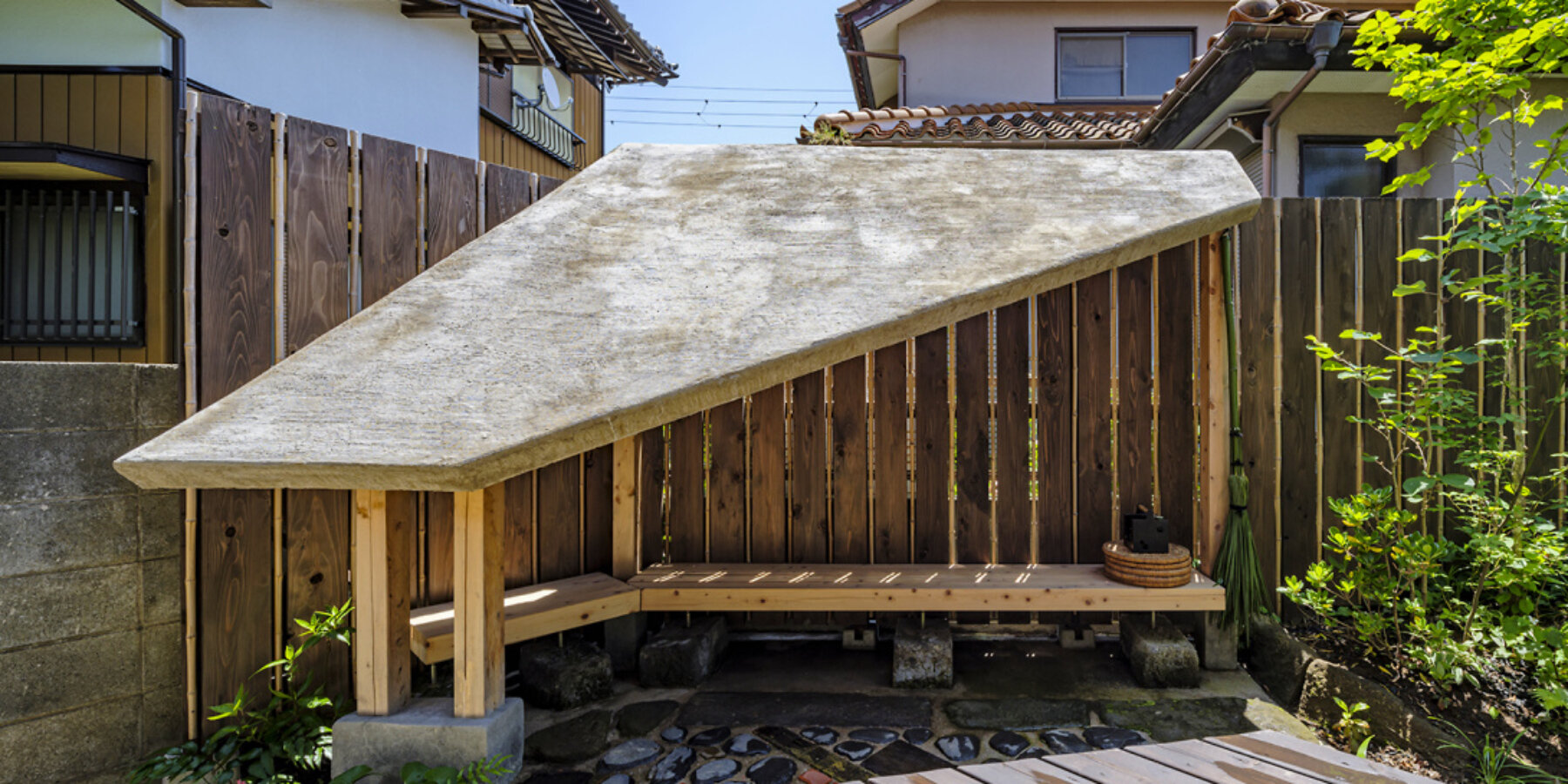
The Sekiyuan Waiting Area, located in Ichihara City, Chiba, Japan, functions as a small structure where guests briefly wait before entering the adjacent tea room. Designed and built by Kurosawa Kawara-ten in collaboration with an architect and an artist, not professional builders, through the DIT (Do It Together) approach, the project explores how informal building practices can contribute to contemporary architectural culture.


The structure introduces a deformed single-slope roof supported at three points. Its surface is finished with mortar mixed with soil excavated from the foundation, extending across the gables and eaves for a unified appearance. No waterproofing was applied, allowing the surface to retain moisture and eventually support moss growth. The roof’s intentionally low point at the rear subtly encourages visitors to bow as they enter, contributing to the tea ceremony’s spatial etiquette while reducing hierarchical distinctions among guests. The diagonal opening of the roof establishes a clear directional gesture, guiding movement through the alleyway.


all images by Masato Chiba


raw earthen materials sculpt Sekiyuan teahouse’s Waiting Area


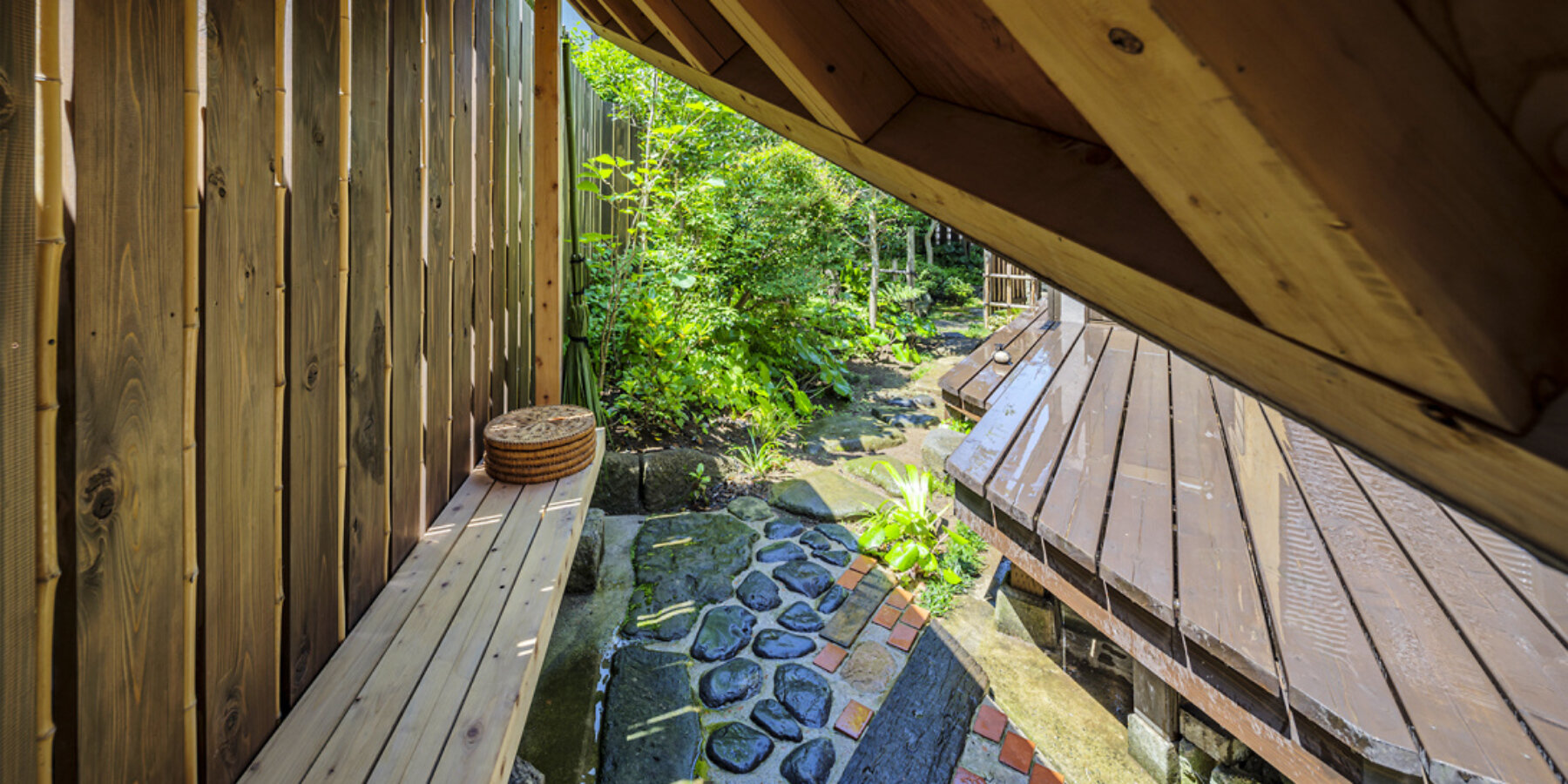
The project responds to the site’s existing garden layout. The landscape plan, developed by Takeda-ya Sakuteiten, introduced new paths and a bench-like waiting area using irregularly placed bricks and tiles. These elements informed the building’s informal composition and its focus on reinterpreting conventional forms. Constructed without professional builders, the project uses its small scale and non-essential program to foreground the act of making. Tasks such as cutting timber, carving components, excavating soil, and mixing mortar become central to the project’s intent, highlighting building as a hands-on, responsive process. The structure’s suspended mortar-and-earth roof introduces a slight sense of instability, heightening spatial awareness and anticipation as visitors approach the tea room.


By relying on accessible materials and manual techniques, the project reflects on the diminishing role of amateur participation in contemporary construction. It demonstrates how small, non-urgent structures can reintroduce flexibility, experimentation, and a sense of agency in shaping one’s environment. The Sekiyuan Waiting Area by studio Kurosawa Kawara-ten positions this approach not as nostalgic reconstruction but as a pathway to restoring forms of conviviality and fundamental understandings of how spaces can be made.


small waiting structure marking the approach to the Sekiyuan tea room


a single-slope roof supported at three key points

sekiyuan-waiting-area-kurosawa-kawara-ten-ichihara-city-chiba-japan-designboom-1800-2

mortar mixed with excavated soil forms the roof’s textured surface


unwaterproofed roof designed to retain moisture and encourage moss growth

sekiyuan-waiting-area-kurosawa-kawara-ten-ichihara-city-chiba-japan-designboom-1800-3

timber cutting and carving contributed directly to the construction process


low rear roof height prompts visitors to bow on entry


roof opening creates a diagonal gesture that guides movement


suspended roof introduces a controlled sense of instability


earth-based materials connect the structure to its immediate site


manual techniques emphasize accessible, low-impact construction


structure positioned within the garden path leading to the tea room


approach path heightens anticipation before the tea ceremony


project info:


name: Sekiyuan waiting house

architect: Kurosawa Kawara-ten | @kurosawakawara_ten

lead architect: Atsushi Ikeda

location: Ichihara City, Chiba, Japan

photographer: Masato Chiba


designboom has received this project from our DIY submissions feature, where we welcome our readers to submit their own work for publication. see more project submissions from our readers here.

edited by: christina vergopoulou | designboom

The post moss-covered earthen roof shields teahouse’s waiting area in japan appeared first on designboom | architecture & design magazine.
nomad studio’s charred juniper ring marks the scar of a wildfire in northern spain

Nomad Studio’s charred circle holds memory, loss, and rebirth


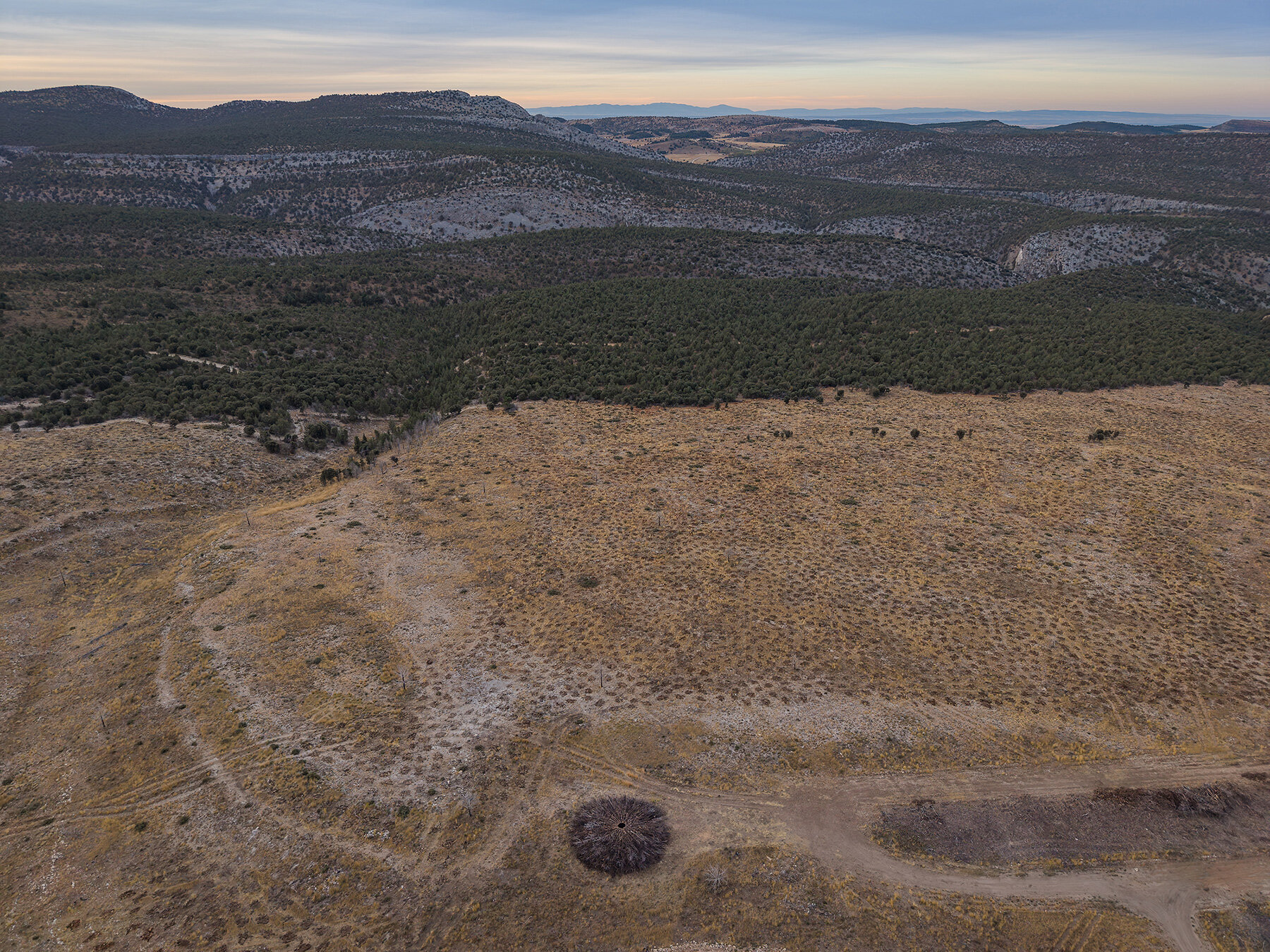
In the burn scar left by the 2022 wildfire in Sabinares del Arlanza – La Yecla Natural Park, Spain, Nomad Studio places Socarrado, a circular structure built entirely from charred juniper trunks recovered after the blaze. First conceived for the Uncommissioned Exhibition by Novo Collective, the work becomes a point of collective reflection for the communities of Santo Domingo de Silos, transforming damaged terrain into a site of memory, refuge, and healing. Its unexpected impact on visitors ultimately led local authorities in Burgos to keep the installation embedded in the landscape rather than dismantle it as originally planned.


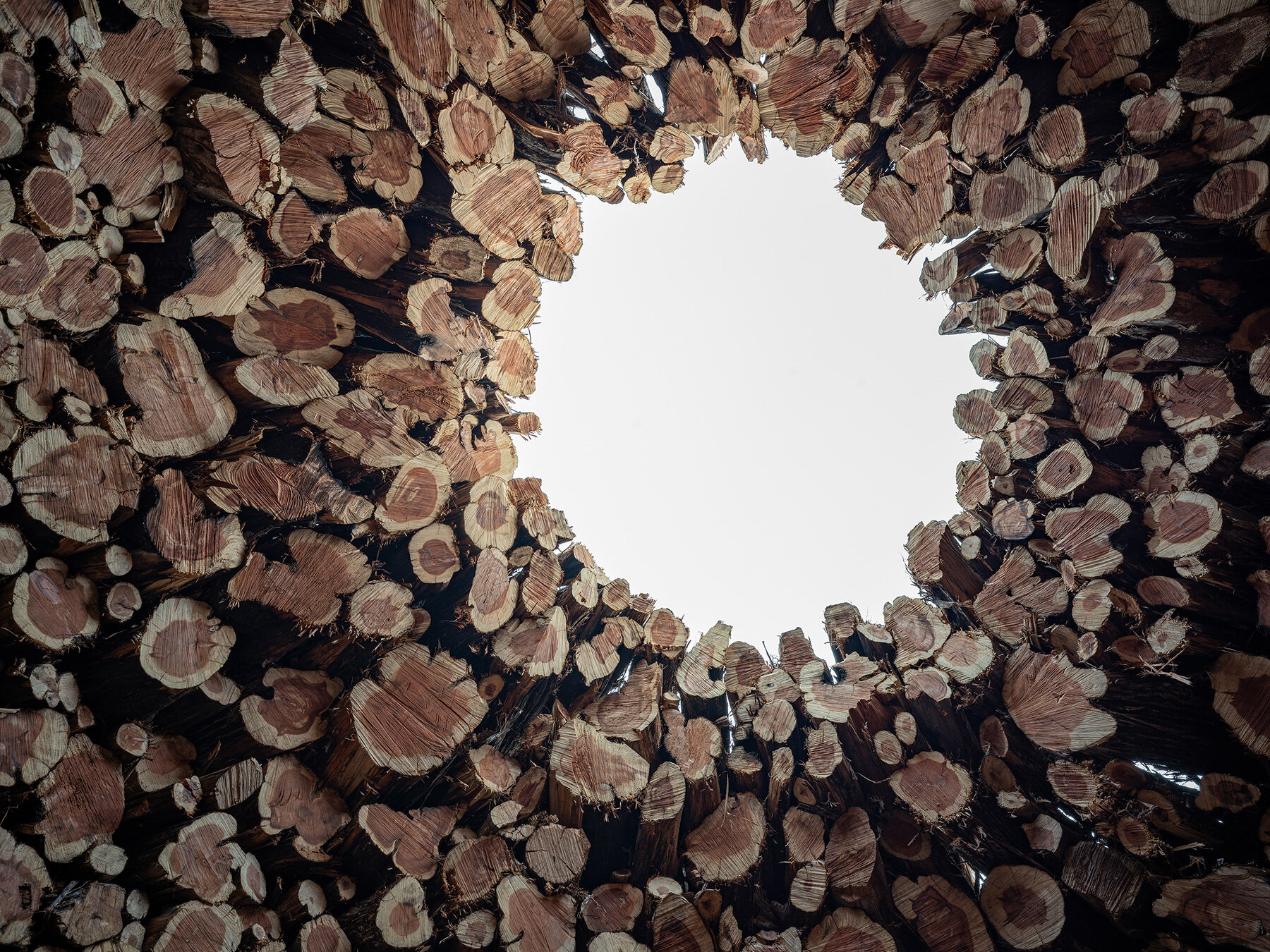
The 15-meter-wide ring is assembled from blackened juniper trunks stacked concentrically, forming a dark perimeter that still bears the physical trace of fire. Their crowns extend outward across the terrain like the faint outline of a vanished forest, while the circular configuration recalls traditional Castilian enclosures once used to protect livestock. At the center, a three-meter-diameter cavity rises into a small vaulted chamber made from split trunks. A single opening at the apex allows a narrow shaft of light to pierce the dense timber mass.


The vertical weight of the charred wood, the scent of resin, and the subdued lighting inside the structure create an atmosphere that borders on ritual. The space concentrates attention on the surrounding land’s wounds while suggesting the possibility of renewal. ‘Socarrado encourages visitors to be present, value authenticity, and restore their essential bond with the land,’ notes Nomad Studio co-founder Laura Santín.


all images by Nomad, unless stated otherwise


a critical reflection on digital distance and fragile ecologies


Beyond the sculptural form of Socarrado, creative workshop Nomad Studio proposes a broader critique of how contemporary life distances people from their environments. The circle of burnt junipers becomes a counterpoint to a digital world that dilutes attention and distorts our sense of place. Its simplicity insists on pausing, focusing and reconnecting with what cannot be mediated by screens.


Residents, volunteers, local businesses, and partners participated directly in collecting material and assembling the work. Its realization was fully funded through collective contributions and supported by the Municipality of Santo Domingo de Silos, the Natural Park management, SOMACYL, Bombyte, and others.


In March 2026, the site will host ergo IGNIS, a performative action conceived by artist William Kingswood in collaboration with local performers. Designed as a ritual of awareness, the piece responds to the burned landscape and the communal energy that shaped Socarrado. After visiting the site, Kingswood described it as ‘a desolation, a return to nature, a refuge within a hostile landscape.’


Nomad Studio places Socarrado in the burn scar left by the 2022 wildfire in Sabinares del Arlanza, Spain


a circular structure built entirely from charred juniper trunks recovered after the blaze


the work becomes a point of collective reflection | image by Almudena Cadalso

nomad-studio-charred-juniper-ring-scar-wildfire-northern-spain-designboom-large02

transforming damaged terrain into a site of memory


its impact on visitors led local authorities to keep the installation permanently | image by Almudena Cadalso


assembled from blackened juniper trunks stacked concentrically | image by Almudena Cadalso

nomad-studio-charred-juniper-ring-scar-wildfire-northern-spain-designboom-large03

a three-meter-diameter cavity rises into a small vaulted chamber made from split trunks | image by Michael Heinrich


the circular configuration recalls traditional Castilian enclosures | image by Almudena Cadalso


a narrow shaft of light pierces the dense timber mass | image by Michael Heinrich


an atmosphere that borders on ritual | image by Almudena Cadalso


crowns extend outward across the terrain like the faint outline of a vanished forest | image by Michael Heinrich

nomad-studio-charred-juniper-ring-scar-wildfire-northern-spain-designboom-large01

a dark perimeter still bears the physical trace of fire | image by Michael Heinrich


project info:


name: Socarrado

architect: Nomad Studio | @thenomadstudio

location: Sabinares del Arlanza – La Yecla Natural Park, Burgos, Spain

area: approx. 200 square meters

support: Municipality of Santo Domingo de Silos, Park Management Office, SOMACYL, Bombyte, local collaborators

The post nomad studio’s charred juniper ring marks the scar of a wildfire in northern spain appeared first on designboom | architecture & design magazine.

glass curtain wall envelops richter gedeon’s headquarters by ZDA in budapest

ZDA Designs Richter Gedeon’s Flagship Headquarters in Budapest


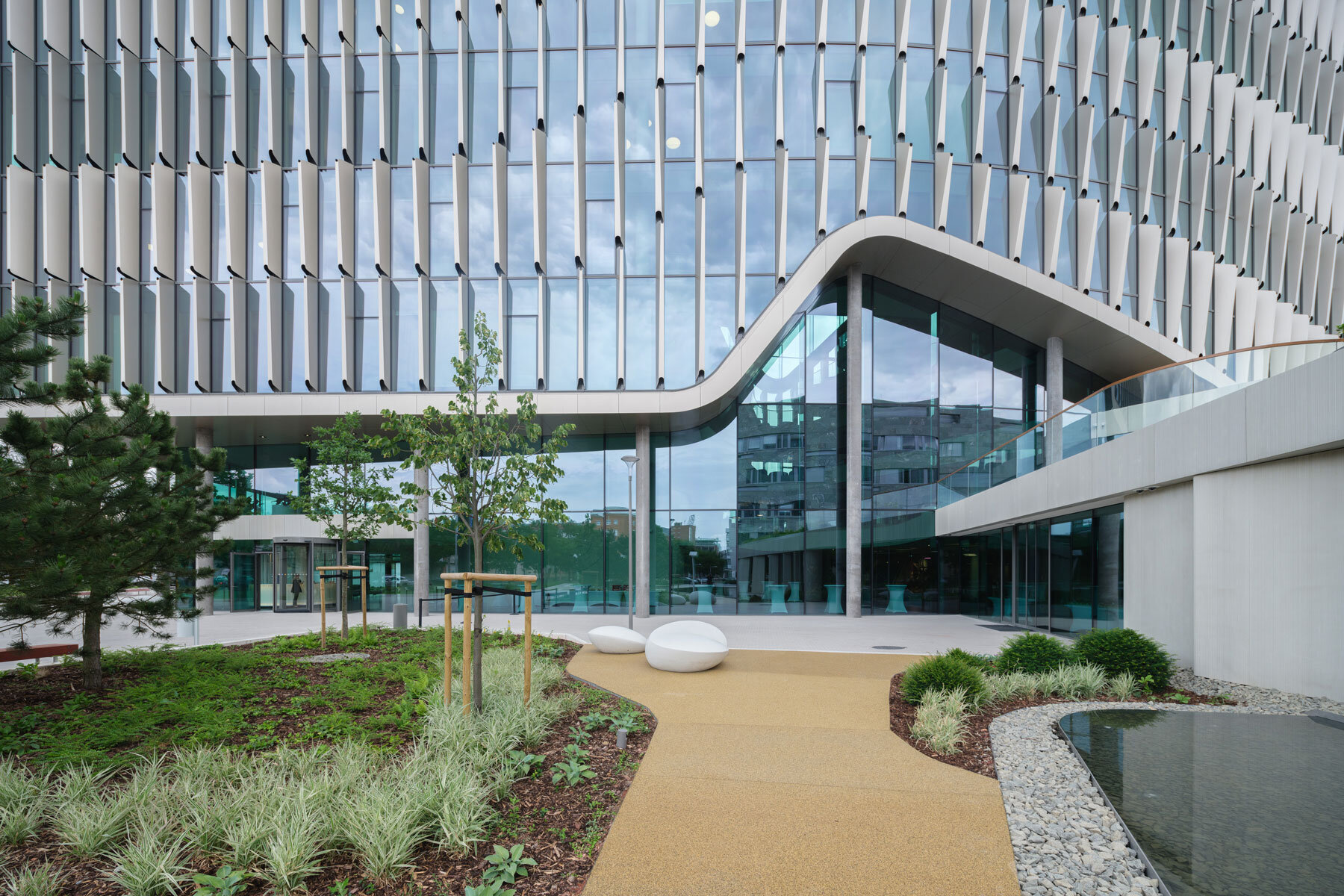
ZDA introduces Richter Gedeon’s new headquarters, a flagship workplace where innovation, nature, and architectural precision converge. The building stands at the intersection of heritage and high-performance design. With operations in over 50 countries and more than 12,000 employees worldwide, Richter Gedeon’s new headquarters in Budapest acts as the central hub for global strategy and management. The 17,400 sqm building accommodates 400 permanent workstations, a 120-seat auditorium, and community spaces including a 150-seat restaurant and generous green rooftop gardens, all brought together with a focus on human-centered design and future-facing architecture.


Located along Gyömrői Road in Kőbánya, an area historically tied to the company’s origins, the headquarters is part of a long-term master plan by ZDA, begun over two decades ago. The site selection and architectural concept intentionally bridge the company’s past with its ambitions for the future, combining a deeply rooted local identity with globally competitive design thinking. The building’s sculptural facade reflects a unique balance between the rigor of pharmaceutical R&D and the creative freedom of innovation. Each element, from the intricate curtain wall to the sun-shading lamellae, speaks a design language of precision, flow, and repetition, akin to the scientific processes the building houses.


all images courtesy of ZDA | Zoboki Design & Architecture 


Interior Flow, Material Clarity, and Sustainable Performance


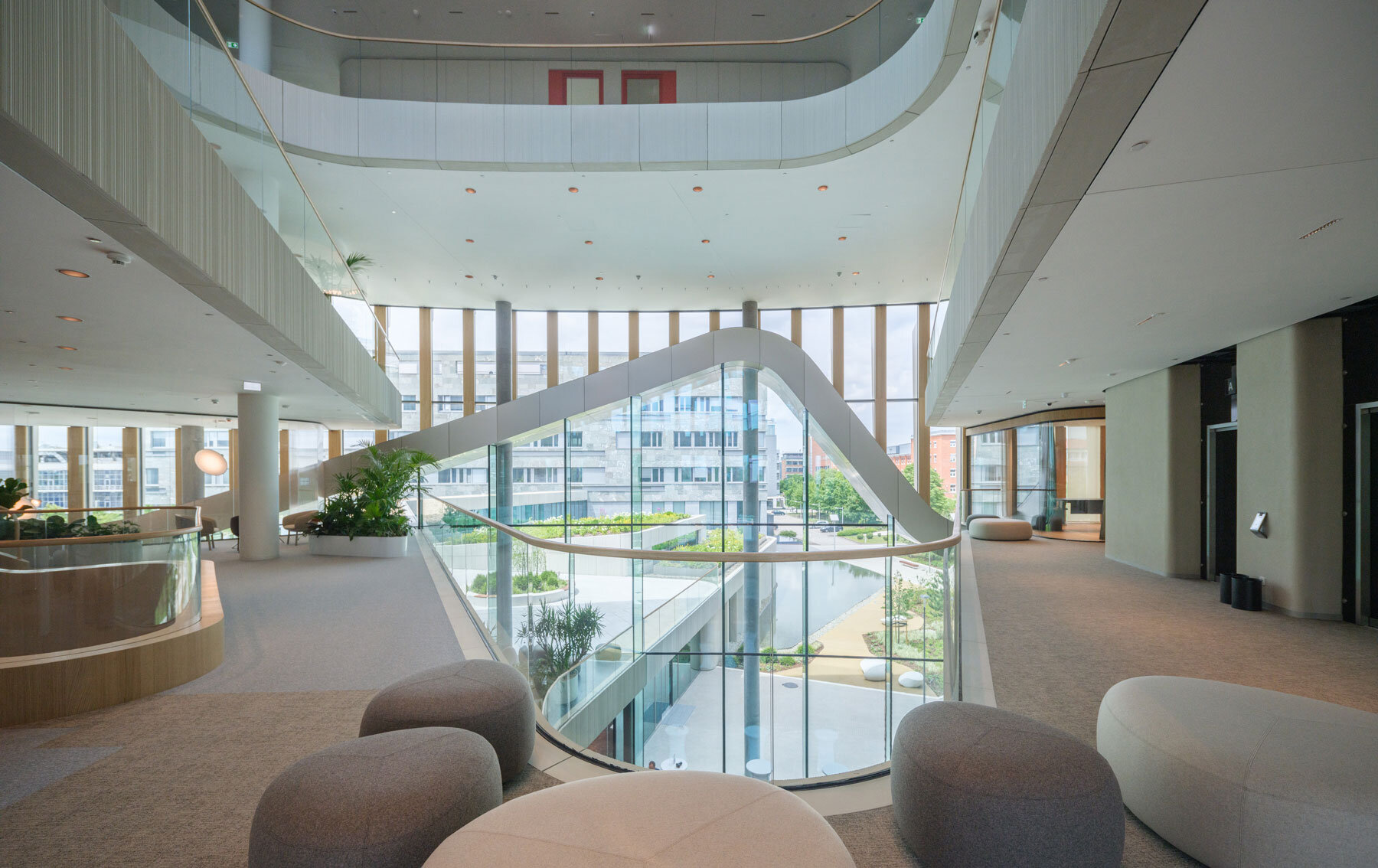
ZDA | Zoboki Design & Architecture Studio extends the concept of flow inside. A generous central atrium, naturally lit and spatially dynamic, forms the heart of the headquarters. Its striking staircase structures offer more than circulation; they become points of encounter, fostering informal communication, while connecting levels with architectural grace. The interior material palette emphasizes natural finishes, such as wood, glass, and refined plaster surfaces, to contribute to a calming yet sophisticated environment. Colors and textures were carefully selected to support both focused individual work and collaborative activities. Throughout the process, ZDA conducted employee interviews and workshops to tailor the design around real needs and workflows. Ergonomics and acoustic comfort were prioritized in all workspaces, ensuring that the office is not only aesthetically pleasing but also quiet, comfortable, and productive.


ZDA approached the project with a commitment to sustainable architecture, achieving compliance with LEED Gold standards. 183 geothermal probes provide eco-efficient heating and cooling through ground-source energy, dramatically reducing the building’s energy demand. The surrounding landscape and building envelope include: 2,500 sqm of green rooftops, 2,600 indoor plants, 52 newly planted trees, and over 20,000 shrubs and perennials, 400 sqm of reflective water surfaces, and 600 custom-designed sun-shading elements on the glass facade. These features improve local microclimate, support biodiversity, and harvest rainwater, creating a holistic environmental strategy that integrates building, landscape, and city fabric.


What sets this building apart is not only its scale or program, but the level of detail and bespoke craftsmanship visible throughout. From custom-designed furniture to hand-finished surfaces, every element speaks of a shared vision between architect and client; a collaboration built on mutual trust, continuity, and ambition. For ZDA | Zoboki Design & Architecture, whose portfolio has increasingly specialized in cultural and high-performance public buildings, the Richter Headquarters marks another step in defining contemporary Hungarian architecture with global relevance.


ZDA designs a flagship workplace for Richter Gedeon in Budapest


a building positioned at the intersection of heritage and high-performance design


a sculptural facade expresses the precision of pharmaceutical R&D

zda-richter-gedeon-headquarters-flagship-budapest-designboom-1800-4

green rooftops, water surfaces, and extensive planting support biodiversity


sun-shading lamellae and curtain wall geometry echo scientific flow and repetition


the headquarters marks a defining milestone in contemporary Hungarian architecture


a facade equipped with 600 custom sun-shading elements improves microclimate

zda-richter-gedeon-headquarters-flagship-budapest-designboom-1800-3

warm materials, such as wood, glass, refined plaster, shape a calming interior palette


project info:


name: Richter Gedeon’s new headquarters
architect: ZDA | Zoboki Design & Architecture | @zda_architecture

location: Gyömrői Road, Budapest, Hungary


lead architects: Gábor Zoboki, András Csiszér

design team: Bánsági Dávid, Cserháti Csinszka, Finta Endre, Borzák Richárd, Galgóczy Bonifác, Jaczó Anna, Seidl Krisztián

main design partners and consultants: VISION Építésziroda, Lab5 Építésziroda, Terraplan ’97 Mérnökiroda, ENCO Mérnöki Iroda, Provill Kft., FRT Raszter Építésziroda, Objekt Tájépítész Iroda, KÉSZ Tervező, Közlekedés Kft., Design Stúdió Kft., Arató Akusztika Kft., Pro-Almond Kft., KörIM Kft., The Greypixel
client: Richter Gedeon Nyrt.

certification: LEED Gold


designboom has received this project from our DIY submissions feature, where we welcome our readers to submit their own work for publication. see more project submissions from our readers here.

edited by: christina vergopoulou | designboom

The post glass curtain wall envelops richter gedeon’s headquarters by ZDA in budapest appeared first on designboom | architecture & design magazine.

SIGLA studio organizes brick residence around two ‘lungs’ of light in spain

SIGLA Studio Designs a Flexible Brick residence in spain


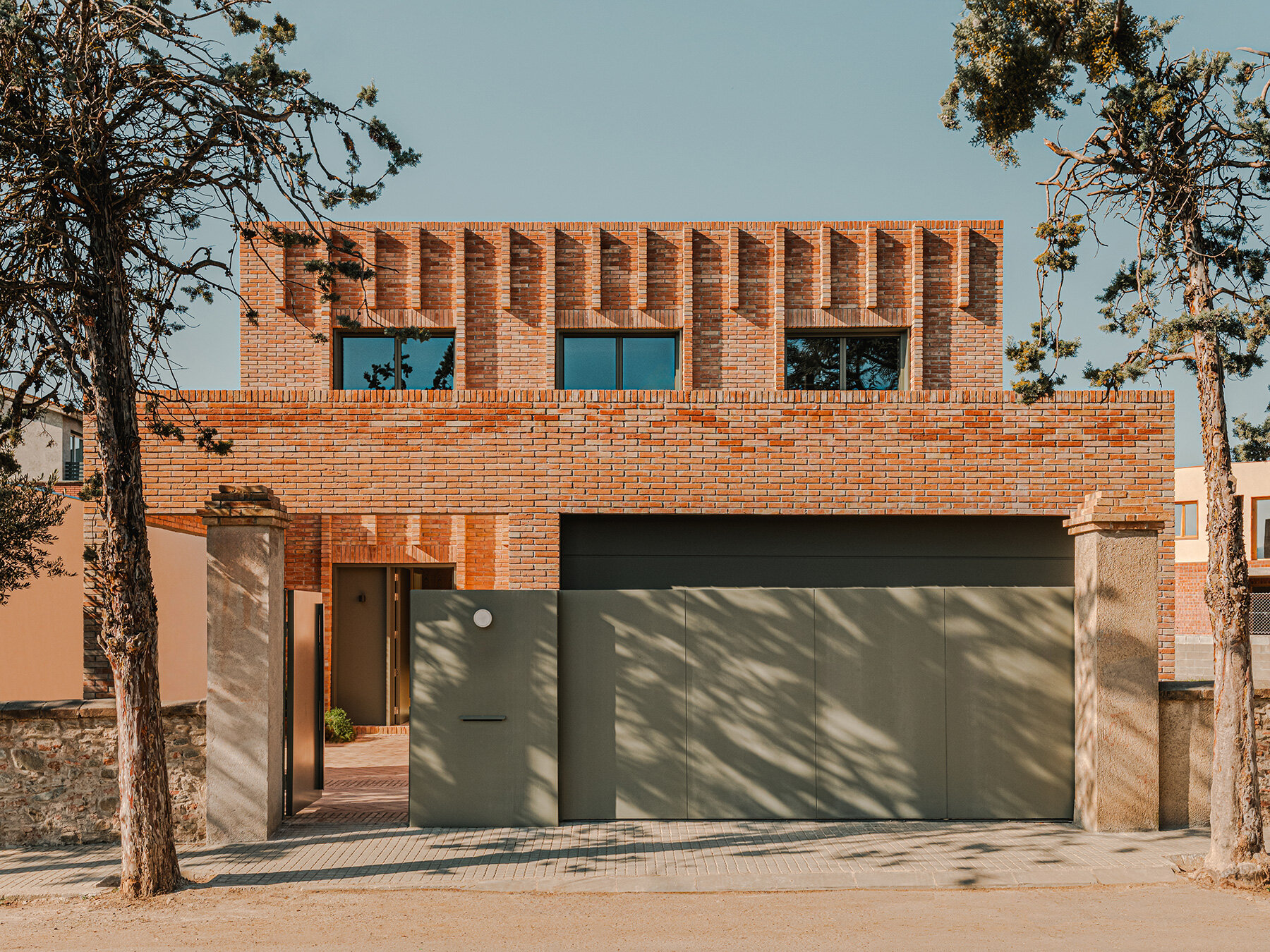
SIGLA Studio completes Patio House in Cardedeu, Spain, a single-family home that treats time as material and method. Conceived for a young couple with two children leaving behind a cramped, compartmentalized apartment, the project offers generous light, direct outdoor connection, and the ability for the house to evolve with changing family life. Built almost entirely within the limits of a narrow, deep plot, the house forms a protective brick perimeter around two inner patios, described by the architects as ‘lungs’, an organizational strategy that gives the family privacy, cross-ventilation, and a slow, measured relationship to daylight.


The current arrangement places the parents’ suite upstairs and the children in interconnected rooms, but the home can invert this configuration as the family grows older. The ground floor can become the main sleeping area; upper rooms can merge or be divided, requiring no construction, only a rethinking of use.


all images by Marta Vidal


Patios as Lungs: Breathing Light and Fresh Air Into a Compact Site


The idea of designing for permanence guided the studio from the outset. Years after encountering the Georg Kolbe Museum House in Berlin, the Barcelona-based architects carried with them the impression of a place that felt relevant nearly a century after its construction, its garden and architecture coexisting without spectacle. That sense of durability resurfaces in Cardedeu, conceiving the house as an environment to be lived in, aged into, and reinterpreted by future occupants. The strategy echoes references such as Alvar Aalto’s Muuratsalo house, where brick walls define, shelter, and mediate the relationship with nature.


Responding to the tight site, SIGLA Studio established the ground floor as a near-complete footprint, respecting setbacks while shaping an inward-facing domestic world. Two patios, one at the entrance and one by the pool, become the lungs of the home, distributing daylight and fresh air to every room. Around them the team organizes the day-to-day spaces, including an entrance hall, kitchen, dining and living rooms, a full bathroom, laundry, garage, and a multipurpose area. Above, two large rooms can be divided into four, while a central landing offers space for study, reading, or play.


SIGLA Studio’s Patio House in Cardedeu, Spain


Materials curated to Reveal the Changing Day


Patio House is anchored by its handmade brick, produced at Forn d’Obra Duran, one of Catalonia’s last artisanal kilns. Each brick, shaped from natural clay, slow-dried, and wood-fired, is slightly different, creating a subtle variation across walls, pavements, sills, and copings. Brick forms the structure, the envelope, and the surface underfoot. By choosing a material that earns its patina, the architects reinforce the commitment of the project to longevity and environmental coherence. Indoors, the palette features microcement on the ground floor, natural parquet above, chestnut wood for built-ins, exposed ceramic vaults on the ceilings, and bathrooms finished with glazed tiles. SIGLA Studio treats light as another structuring element. The house receives sun from morning to late afternoon, and the occupants remain constantly aware of its movement, seasonal changes, shifting shadows, and fluctuating intensities.


this single-family home treats time as material and method


conceived for a young couple with two children


the project offers generous light and direct outdoor connection

sigla-studio-brick-residence-two-lungs-light-spain-designboom-large01

the house can evolve with changing family life


built almost entirely within the limits of a narrow, deep plot


the house forms a protective brick perimeter around two inner patios


the organizational strategy gives the family privacy, cross-ventilation, and a measured relationship to daylight


the idea of designing for permanence guided the studio from the outset


SIGLA Studio established the ground floor as a near-complete footprint


the ground floor can become the main sleeping area


the home can invert this configuration as the family grows older


the strategy echoes references such as Alvar Aalto’s Muuratsalo house


the two large rooms can be divided into four


project info:

name: Patio House

architect: SIGLA Studio | @s1gla

location: Cardedeu, Spain


art direction: Mariela Achón

photographer: Marta Vidal | @_martavidal

The post SIGLA studio organizes brick residence around two ‘lungs’ of light in spain appeared first on designboom | architecture & design magazine.

MVRDV to build vibrant office district in rotterdam with donald judd-inspired facades

MVRDV unveils new 3D office neighborhood for Rotterdam


MVRDV has received approval to build Schieblocks, a 47,000-square-meter office complex set to become the largest private new office building currently under construction in the Netherlands. Rising 61 meters alongside the central railway, the project stacks 11 colorful blocks whose facades combine brick constructed from recycled material and Building Integrated Photovoltaic panels. Drawing inspiration from Donald Judd’s iconic furniture series, the bold composition forms a dynamic ‘slice’ of Rotterdam that brings color, texture, and material innovation into a vertically layered urban ensemble.


all images courtesy of MVRDV


Schiekadeblok & Rotterdam stories embedded in color and form


Located within the Schiekadeblok, a post-war district that evolved into a cult destination for creative businesses, bars, and clubs, the project BY MVRDV echoes the area’s protected character. The Dutch firm divides the long, narrow building into four horizontal segments, each with a distinct plinth and one or two blocks above, referencing the scale of the surrounding reconstruction-era architecture. Carved upper volumes respond to the angle of the sun, preventing shadows from falling on residential areas across the tracks, demonstrating a sensitive approach to densification.


Each block’s unique combination of fenestration and color references different landmarks across Rotterdam. One block features bay windows derived from Huig Maaskant’s Citrusveiling building paired with the vivid yellow of the former Luchtsingel bridge. Another uses the sandstone hue of the city hall with octagonal windows inspired by Hofplein 19 that collectively spell out ‘010,’ Rotterdam’s telephone code. This layered approach transforms the building into a catalog of local architectural memory.


Schieblocks, a 47,000-square-meter office complex for Rotterdam


Public energy at the plinth and on the roof


A transparent ground level hosts public amenities, including a concept store, bakery, and bike café, while linking to a three-level underground parking garage. At the west end, an immovable historic parking ramp from the neighboring Central Post building becomes a feature, enclosed in glass as the centerpiece of the new Wokkelbar, a spiral-shaped venue that channels Rotterdam’s gritty, improvisational spirit.


Above, a rooftop restaurant and two-story cultural space open onto a continuous green landscape by Juurlink & Geluk, complete with water-retaining surfaces, spiral connections, and a solar-panel pergola. Together, these elements signal what MVRDV calls a ‘second reconstruction’ for Rotterdam, one shaped by creativity, sustainability, and bold architectural expression.


the vibrant design draws inspiration from Donald Judd’s iconic furniture series


project info: 


name: Schieblocks
architect: MVRDV | @mvrdv 
founding partner in charge: Winy Maas
director: Gideon Maasland
design team: Gijs Rikken, Bob de Rijk, Guido Boeters, Piotr Janus, Veronica Della Ventura, Magda Porcoțeanu, Valentina Fantini, Renata Tavares, Amanda Galiana Ortega, Mirco Fachinelli, Tobias Kalmbach, Yifei Zhang, Bin Wei, Ievgeniia Koval, Rafiq Sawyerr
location: Rotterdam, Netherlands
area:
47,000 sqm

The post MVRDV to build vibrant office district in rotterdam with donald judd-inspired facades appeared first on designboom | architecture & design magazine.

three asymmetrical curved gable roofs top ASWA’s community hub in thailand

ASWA’s three-volume community hub for Bangkok University


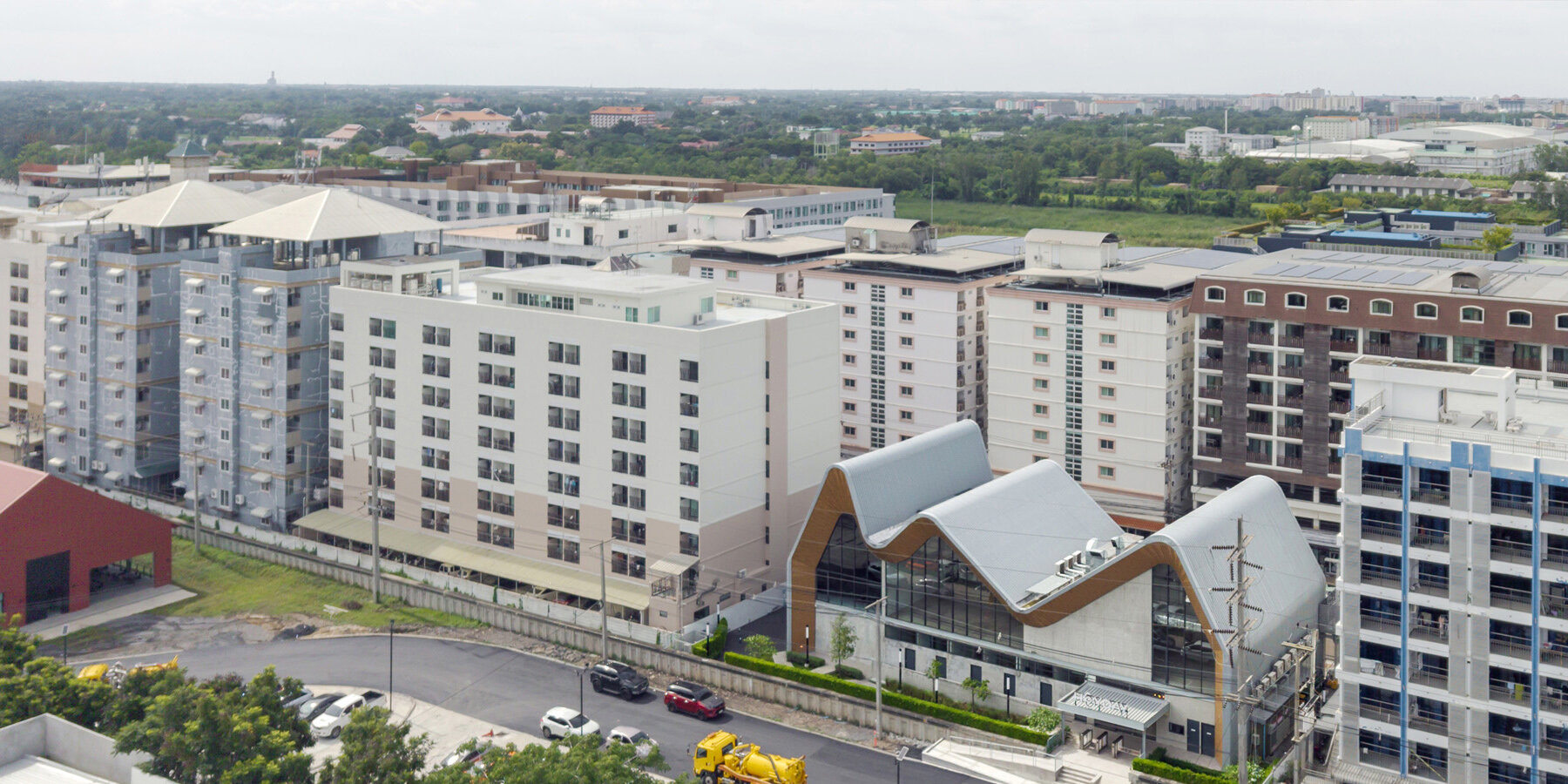
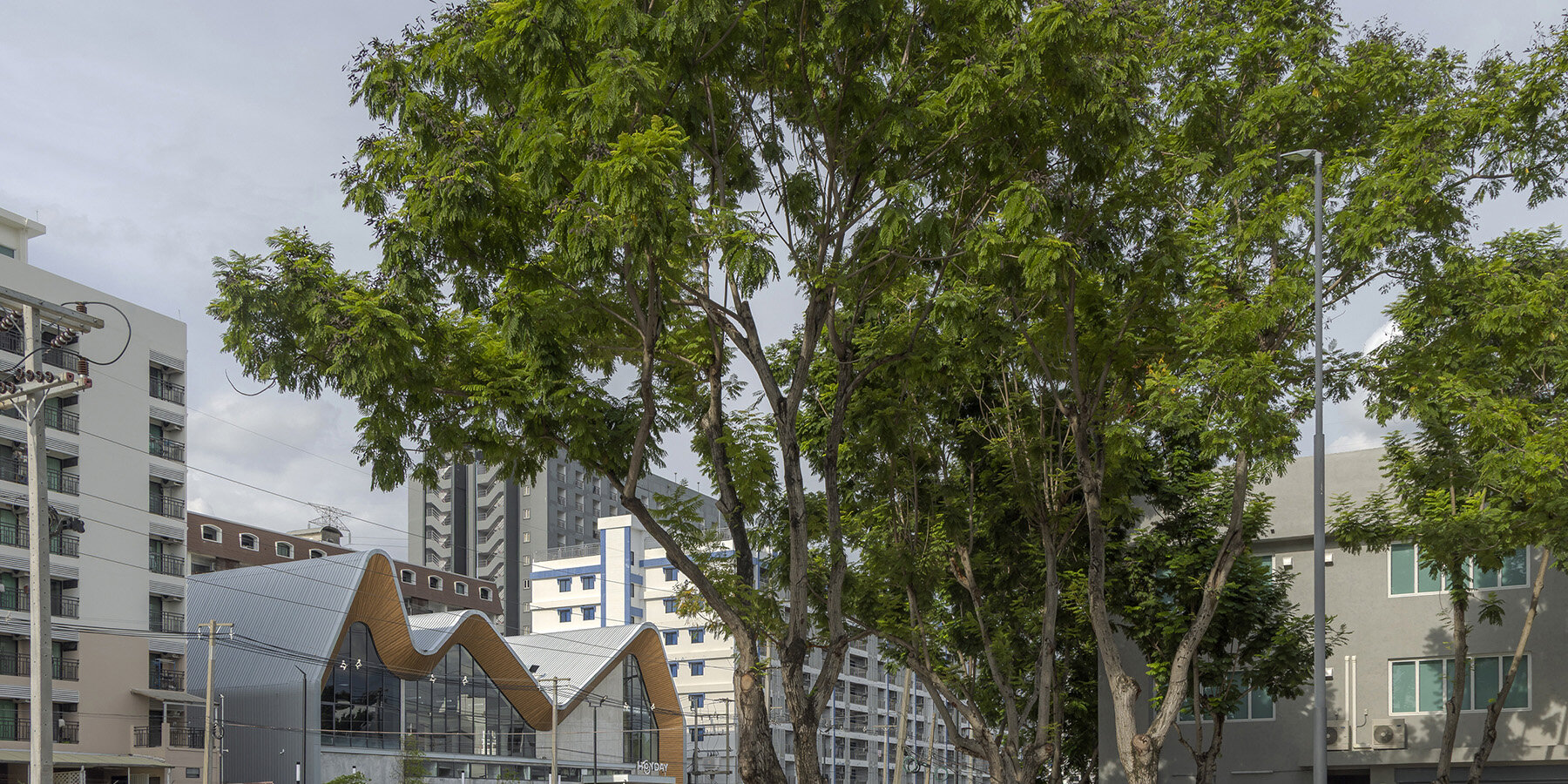
ASWA designs HEYDAY, a new community hub for Bangkok University in Thailand, defined by three asymmetrical volumes. The project combines a co-working space, a food court, and future restaurants all within one building, making it the latest destination for students. Located next to the university campus, the site is situated between blocky apartments that line both sides of a 1-kilometer street. The building features three asymmetrical volumes with curved gable roofs, designed to break the monotony of the surrounding blocky apartments. This energetic and distinctive shape is intended to attract students and faculty, encouraging them to utilize the new hub.


all images by Soopakorn Srisakul


Curved interiors and playful architecture shape HEYDAY hub


To strengthen the connection between the campus and the adjacent apartments, ASWA design studio organizes the site’s accessibility plan. The two-story student hub features a food court and rental spaces on the first floor. A blue staircase leads to the co-working area on the second floor, which includes a mezzanine on one side. The interior of this area features a wavy, curved design that interacts with the various volumes throughout the space, mirroring the exterior’s form. Additionally, the second floor contains two large rental spaces intended for future restaurants or cafes. With its playful, vibrant architecture, the HEYDAY aims to be a welcoming, joyful space where students, faculty, and university personnel can gather frequently, serving as a common area for the entire community.


HEYDAY introduces three asymmetrical volumes beside Bangkok University’s campus


curved gable roofs define the building’s distinctive silhouette


the asymmetrical rooflines break the monotony of the surrounding urban fabric

aswa-heyday-community-hub-bangkok-university-thailand-three-asymmetrical-volumes-designboom-1800-2

HEYDAY sits between long rows of blocky apartment buildings


the hub is designed to attract students and faculty along a busy campus street


the building integrates multiple programs within a compact two-story layout

aswa-heyday-community-hub-bangkok-university-thailand-three-asymmetrical-volumes-designboom-1800-3

ASWA organizes site accessibility to connect the campus with nearby apartments


a blue staircase leads visitors to the co-working area on the upper level


the second floor includes a mezzanine overlooking the central space


interior spaces feature wavy, curved forms that echo the exterior volumes


curved surfaces create a continuous dialogue between inside and outside


the co-working space features a double-height area that interacts with the external volumes


the building’s ground floor features a food court and flexible rental spaces


the exterior form is intended to energize the student district


ASWA’s design establishes a playful, community-focused addition to the campus edge


project info:


name: HEYDAY

architect: ASWA (Architectural Studio of Work – Aholic)@aswa_bangkok

location: Bangkok, Thailand

area: 1,200 sqm

photographer: Soopakorn Srisakul | @soopakornsrisakul


designboom has received this project from our DIY submissions feature, where we welcome our readers to submit their own work for publication. see more project submissions from our readers here.

edited by: christina vergopoulou | designboom

The post three asymmetrical curved gable roofs top ASWA’s community hub in thailand appeared first on designboom | architecture & design magazine.